

The Vanishing Aromanian Today, Eugene Matzota ▲▲▲ ALTCULTURE MAGAZINE Nr.107, 7/2026 ▲▲▲ Noi mai credem încă în cultură! The Vanishing Aromanian Today — recently launched on Amazon! Abstract: Written for those brothers of mine who are close to me, but far from their identity, this book offers a comprehensive journey through the history, resilience, and modern challenges of a remarkable people without a state, yet never without an identity. Tracing the thread of Aromanian history from Antiquity to the present, the work explores the diverse etymology and background of their names through Theodor Capidan’s lens, contrasts simplistic stereotypes with nineteenth-century accounts of flourishing urban and commercial communities by travelers like William Martin Leake, Gustav Weigand, and Ami Boué, and confronts the silent, contemporary threat of globalized assimilation. It stands as a vital call to action for each new generation to preserve its language, traditions, and collective memory.

Drumuri la mănăstiri (II) – Fragment din ”Omul de cenușă” ▲ ALTCULTURE MAGAZINE Nr.107, 07/2026 ▲
Drumuri la mănăstiri (II) by Nicholas Jordan ▲▲▲ ALTCULTURE MAGAZINE Nr.107, 7/2026 ▲▲▲ Noi mai credem încă în cultură! Abstract: In "Drumuri la mănăstiri (II)", published in ALTCULTURE Magazine (no. 107, 2026) as an excerpt from "Omul de cenușă", author Nicholas Jordan chronicles a tour group's journey through the winding roads of the Prahova Valley, Brașov, Bran, and Sighișoara. Set against the stark backdrop of late-communist Romania, the narrative follows an eclectic mix of Western tourists obsessed with vampire myths and Count Dracula, led by an observant guide named Nic and a silent, enigmatic driver. Blending sharp sociological observation with atmospheric travelogue, the text explores the clash between romanticized literary expectations and the grim, melancholic realities of local daily life. From chaotic medieval banquets and damp lodgings to encounters with historical landmarks like the birthplace of Vlad Țepeș and the wooden staircase of Sighișoara, the narrative reflects on isolation, systemic oppression, and the peculiar ways foreign travelers seek out fantasy within a deeply constrained world.

MOROIUL, de Nicolaie Dincă ▲ ALTCULTURE MAGAZINE Nr.107, 07/2026 ▲
MOROIUL by Nicolae Dincă ▲▲▲ ALTCULTURE MAGAZINE Nr.107, 7/2026 ▲▲▲ Noi mai credem încă în cultură! Abstract: In "Moroiul", published in ALTCULTURE Magazine (no. 107, 2026), author Nicolae Dincă crafts a rich, atmospheric narrative steeped in the folklore, rustic mythology, and superstitions of the Olteț valley. Set against the bleak backdrop of a freezing November night, the story follows two local fiddlers, Vasile al lui Biță and Nelu, as they navigate a disorienting fog after performing at a raucous, decadent party hosted by a local politician. Blending dark rural realism with elements of the uncanny, the text captures the psychological descent of the two musicians into profound terror when they mistake a decaying, wind-beaten tree stump for a terrifying phantom or "moroi" demanding music. Through vivid dialogue, ancestral echoes of outlaws like Biță Duduveică, and a masterful shift from supernatural dread to sobering daylight realization, the narrative explores the fragility of human perception, the haunting weight of solitude, and the timeless power of folklore in the Romanian countryside.

Dar viața ta?, de Doria Șișu ▲ ALTCULTURE MAGAZINE Nr.107, 7/2026 ▲
Dar viața ta? de Doria Șișu ▲▲▲ ALTCULTURE MAGAZINE Nr.107, 7/2026 ▲▲▲ Noi mai credem încă în cultură! Abstract: In the excerpt from "7 ani", titled "Dar viața ta?" and authored by Doria Șișu, the text delivers an intense, deeply introspective monologue on existential solitude, maternal love, and the heavy burdens of memory. Framed through a poignant dialogue with an unseen interlocutor, the narrative explores a life viewed as accidental and uncelebrated, haunted by the realization of lost time and the painful weight of self-reckoning. The excerpt captures a raw emotional reckoning with regret, focusing on an unconditional, all-consuming love for a daughter and a partner—the two beings for whom the narrator would sacrifice everything. Through lyrical vulnerability and poignant imagery of longing, the text reflects on the inevitability of mortality, the desire to transcend physical absence to remain a comforting presence like rain or wind, and the quiet exhaustion of a soul coming to terms with its own deeply felt destiny.

Polul de Putere (III) ▲ ALTCULTURE MAGAZINE Nr.107, 07/2026 ▲
Polul de Putere (III) de Claudiu Iordache ▲▲▲ ALTCULTURE MAGAZINE Nr.107, 7/2026 ▲▲▲ Noi mai credem încă în cultură! Abstract: In "Polul de Putere II", published in ALTCULTURE Magazine (no. 107, 2026), author Claudiu Iordache delivers a profound philosophical critique of contemporary power structures, state mechanics, and the psychological subjugation of the modern individual. Challenging Francis Fukuyama’s premise on the "End of History," the essay argues that history continues to be driven by the unyielding expansion of power and the commodification of human existence. Drawing upon a rich tapestry of philosophical and sociological thought—including thinkers like Umberto Eco, Zygmunt Bauman, Friedrich Nietzsche, Erich Fromm, and John Gray—Iordache examines how the American-led model of hyper-competition and global capitalism fosters a culture of mass conformity, alienation, and moral exhaustion. The text explores the tragedy of the "insignificant man," the docile citizen who willingly trades liberty for security, consumption, and systemic servitude. Ultimately, the essay contrasts the destructive allure of centralized power with the redemptive, quiet resistance of authentic creation and spiritual autonomy, warning that a civilization defined solely by profit and market logic risks perishing from the very weight of its own mechanical success.
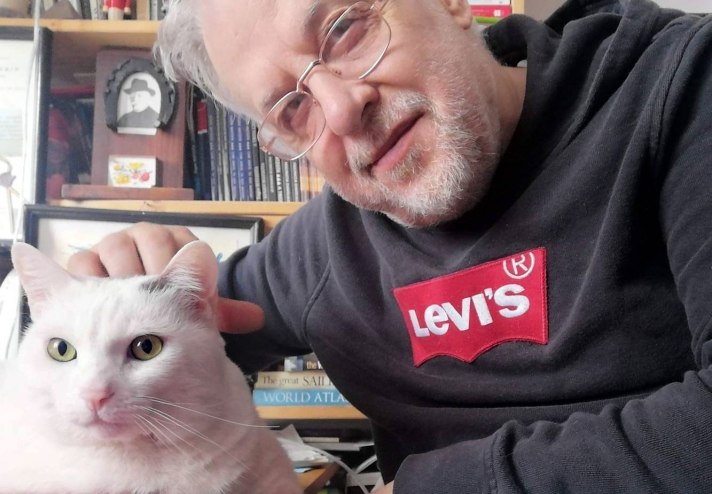
Arta de a opri timpul într-o lume care se grăbește să dispară, de Eugen Matzota ▲ ALTCULTURE MAGAZINE Nr.106, 06/2026 ▲
Arta de a opri timpul într-o lume care se grăbește să dispară, de Eugen Matzota ▲ ALTCULTURE MAGAZINE Nr.106, 06/2026 ▲ Noi încă mai credem în cultură! Abstract: The Architecture of Resistance – A Manifesto for the 106th Issue of ALTCULTURE Magazine In this editorial, the author addresses a critical turning point for ALTCULTURE Magazine as it marks its 106th issue. Reflecting on nine years of intellectual pursuit, the piece serves as both a reflection on the state of contemporary society and a bold announcement regarding the publication's future strategy. The editorial explores the following core themes: • The Erosion of Depth: A sharp critique of how the "sacred intervals" of human reflection—patience, silence, and memory—are being sacrificed to the brutal speed of digital consumption and the "white noise" of screens. • The Sociological Diagnosis: A poignant observation on the transformation of the Romanian public from a collective with a cultural consciousness into a passive population, leading to the difficult decision to cease publishing dense literary works and essays exclusively for the domestic market. • The Language of Resistance: The author clarifies that while the medium of distribution is changing, the Romanian language remains the fundamental instrument of thought and the heart of the magazine. • The Act of "Building": The magazine is framed not as a nostalgic endeavor, but as an act of moral resistance. By standing against the tide of efficiency-obsessed digital culture, ALTCULTURE continues its mission to provide a space for the "slow time" where true human connection—and true culture—can still exist. The text serves as a manifesto for those who still value the sanctity of the "interval" and confirms the magazine's commitment to continue its journey wherever the spirit has room to manifest, beyond the confines of a stagnant digital wasteland.

Coduri geometrice, cosmice ale iei ▲ ALTCULTURE MAGAZINE nr.106, 06/2026 ▲
Coduri geometrice, cosmice ale iei de Petru Solonaru ▲▲▲ ALTCULTURE MAGAZINE ● 106 ● 06/2026 ▲▲▲ Noi încă mai credem în cultură! Abstract Title: “Geometric, Cosmic Codes of the IA” Author: Petru Solonaru Publication: ALTCULTURE MAGAZINE no. 106, 06/2026 “We still believe in culture!” Overview This article explores the Romanian traditional blouse (ia) as far more than a decorative folk garment, presenting it as an applied sacred science and an ancient geometric matrix. Through a blend of sacred geometry, metaphysics, and quantum physics concepts, the text analyzes the orthogonal grid of woven fabric (urzeală și bătătură) as a space-time informational field designed to capture and structure cosmic energy. The needle acts as an instrument of intentionality—collapsing wave functions with every stitch—while geometric patterns (altița, râurile) strategically cover the body's energy centers to act as quantum armor. By utilizing precise hyper-geometric angles and logarithmic spirals, traditional craftswomen intuitively calibrated these garments to tune human bio-fields with universal Ether vibrations, bridging the micro- and macrocosmos.