

CONVOIUL (XV) by Gheorghe Schwartz Translated by Eugene Matzota ▲▲▲ ALTCULTURE MAGAZINE Nr.108, 8/2026 ▲▲▲ Noi încă mai credem în cultură! Abstract: In "The Convoy (XV)", published in ALTCULTURE Magazine (no. 108, 2026) as an excerpt from Gheorghe Schwartz's visionary speculative work, the narrative plunges deeper into the disorienting, meticulously engineered realities of life outside the collective march. Against a backdrop of silent surveillance, pervasive self-censorship, and automated transportation, the protagonist reflects on a tense encounter at a secluded niche table with a nervous, polarized-lens-wearing youth who has similarly abandoned the serpentine procession. Blending sharp existential philosophy with Orwellian institutional critique, the text examines the friction between assigned covert missions, the illusion of free will, and the haunting psychological vacuum left behind by erased memories and cashless societies. As the protagonist navigates urban traffic toward a rendezvous at Konrad's—haunted by fleeting glimpses of women seemingly vanished from the Convoy—the excerpt resonates as a profound exploration of human alienation, systemic control, and the desperate quest for individual identity in a totally programmed world.

Maria (I) – Fragment din ”Omul de cenușă” ▲ ALTCULTURE MAGAZINE Nr.108, 08/2026 ▲
Maria (I), Nicholas Jordan ▲▲▲ ALTCULTURE MAGAZINE Nr.108, 8/2026 ▲▲▲ Noi mai credem încă în cultură! Abstract: In "Maria", published in ALTCULTURE Magazine (no. 108, 2026) as an excerpt from Nicholas Jordan's work ASHMAN, the narrative follows the tour group’s ascent into the picturesque yet austere landscapes of Bukovina, arriving at Vatra Dornei against a backdrop of mounting geopolitical tension. As rumors of civil unrest and historical uprisings filter in from the outside world via anxious transatlantic phone calls and foreign journalists, the narrator navigates eccentric interpersonal dynamics among the travelers—notably the mismatched, reluctant pairing of Moira and Geoffrey Johnston. Blending vivid travelogue with evocative reflections on sacred art and spiritual pilgrimage, the text captures the group's visit to the legendary painted monasteries of Moldovița. Amidst stunning Byzantine frescoes and discussions of medieval theology with local monastics, the narrator encounters Maria, an enigmatic and brilliant tour guide whose sharp intellect and intersecting paths with foreign reporters hint at deeper cultural and spiritual currents just beneath the surface of a changing Romania.

GLUME PROASTE, de Nicolaie Dincă ▲ ALTCULTURE MAGAZINE Nr.108, 08/2026 ▲
GLUME PROASTE by Nicolae Dincă ▲▲▲ ALTCULTURE MAGAZINE Nr.108, 8/2026 ▲▲▲ Noi mai credem încă în cultură! ABSTRACT Title: Glume proaste (Bad Jokes) Author: Nicolaie Dincă Source: ALTCULTURE MAGAZINE, No. 108, 08/2026 Synopsis and Themes This darkly comic, satirical rural short story blends elements of local folklore (specifically the myth of the moroi or vampire) with domestic farce and heavy drinking. Set in a village cemetery and the households nearby, the narrative explores marital infidelity, neighborhood gossip, and the absurd misunderstandings between a heavy-drinking husband, his unfaithful wife, and her lover. Key Ideas • The Cemetery Awakening: Ionel, heavily intoxicated, wakes up naked inside the tomb of his recently deceased, alcohol-preserved friend Gogu. Finding a pair of dark underwear and a white tank top under a nearby walnut tree, he puts them on and walks home. • The Secret Encounter: The clothes actually belong to Ionel's wife, Gigela, and her lover/cousin, Marcel, who had rushed to the cemetery to look for Ionel and ended up distracted by a romantic interlude under the moonlight, leaving their clothes behind. • The Supposed Vampire: Amid rumors that Gogu has risen as a moroi (vampire) taking revenge on his enemies, another local rival dies suddenly. Spurred by fear and local superstition, Ionel and a band of villagers break into Gogu's tomb to drive a wooden stake through his heart. • The Comedic Twist: Inside the crypt, Gogu is found wearing Ionel's missing clothes, holding a photograph of Gigela and Marcel. Just as Gogu opens his eyes and seems ready to reveal the truth, the villagers strike the stake, forever silencing the "vampire" and preserving the awkward domestic status quo.

moartea face cu mâna… nebuna, de Doria Șișu ▲ ALTCULTURE MAGAZINE Nr.108, 8/2026 ▲
moartea face cu mâna... nebuna, de Doria Șișu ▲ ALTCULTURE MAGAZINE Nr.108 8/2026 ▲ ABSTRACT Title: moartea face cu mâna... nebuna (death waves its hand... the crazy one) Author: Doria Șișu Source: ALTCULTURE MAGAZINE, No. 108, 8/2026 Synopsis and Themes This poem is a striking, fragmented, and highly meta-textual exploration of trauma, repressed memories, and the agonizing process of writing poetry itself. It masterfully blends brutal, surreal imagery with an intruding, cynical voice—acting either as an internal critic or an imagined editor—that constantly interrupts, mocks, and judges the poetic act. Key Ideas • Visceral Trauma and Memory: The poem opens with violent, surreal metaphors—a giant blade rolling through the streets and blood-stained hands that represent "forgotten and murdered memories." It later addresses the chilling normalization of trauma and assault, describing them with a jarring sense of detachment. • The Meta-Poetic Dialogue: What makes the piece unique is the continuous disruption by a second voice. This critical presence breaks the fourth wall, demanding "mystery" and "poetic breath," calling out "clichés," and pitying the author who is "thinking she makes poetry" while stealing words from her past. • Dissociation and Defense Mechanisms: The speaker exhibits profound emotional disorientation, questioning their own subconscious reactions ("I realized I laugh in my sleep / or is sleep laughing in me?"). • Isolation as a Conclusion: The final lines shift to a poignant, quiet resignation. The narrator retreats into darkness, building walls of stones around their knees in a futile, heartbreaking attempt to speak of love to inanimate objects.
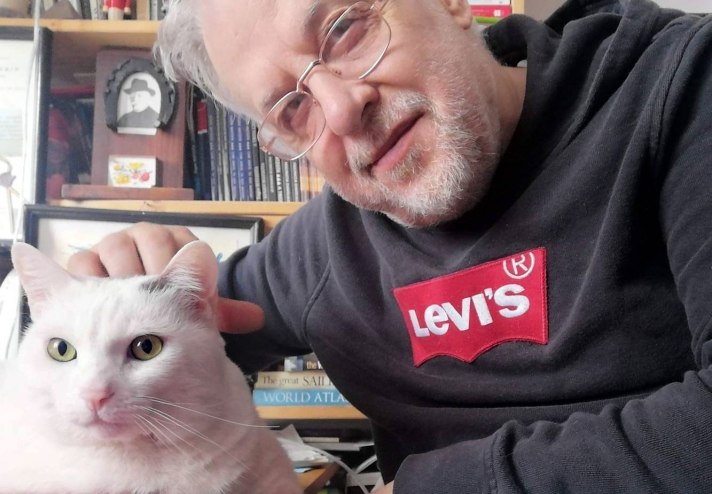
De la iunie 1990 la România fără cărți, de Eugen Matzota ▲ ALTCULTURE MAGAZINE Nr.108, 08/2026 ▲
De la iunie 1990 la România fără cărți, de Eugen Matzota ▲ ALTCULTURE MAGAZINE Nr.108, 08/2026 ▲ Noi încă mai credem în cultură! ▲▲▲ ALTCULTURE MAGAZINE Nr.108, 8/2026 ▲▲▲ Noi mai credem încă în cultură! Editorial — by Eugene Matzota Abstract From June 1990 to a Bookless Romania: A society that trades libraries for screen-fed anger and packaged ignorance willingly condemns itself to short memory and voluntary servitude. Drawing a parallel to the social pathology of June 1990—shifting from physical violence in the streets to mass hysterical applause for the manipulation of primal instincts—this essay critiques the modern collective cowardice and rejection of reason. Abandoning books turns humanity into its own executioner, leaving those who embrace darkness with no right to complain when they are ruled by shadows.

1. Simpozion imaginar „Despre dragoste” ▲ALTCULTURE MAGAZINE Nr.108, 08/2026▲
1. Simpozion imaginar „Despre dragoste” ▲ALTCULTURE MAGAZINE Nr.108, 08/2026▲ Noi mai credem încă în cultură! ABSTRACT Title: Imaginary Symposium – On Love Author: Ion Bogdan Martin Source: ALTCULTURE MAGAZINE 108, 08/2026 Synopsis and Themes The text adopts the format of a written "imaginary symposium," set against the musical backdrop of Leonard Cohen’s *Dance Me to the End of Love*. The author explores the many facets of love—ranging from family and civic affections to electoral absurdity, quirky Romanian naming traditions, and domestic relationships—stripping away romantic clichés through self-deprecation, sharp humor, and keen social observation. Key Ideas The Anatomy of the Sentiment: The piece clearly distinguishes between true love (vision, emotion, a state of grace that makes one a better person) and mere instinct or sex, playfully mocking modern exaggerations and myths of legendary conquests. Everyday Absurdity and Onomastics: Through various humorous tangents, the author examines the quirks of given names, the farce of political campaigns, and the small comedies and dramas of marriage. Authenticity and Self-Irony: Using personal anecdotes—from a tense relationship with a future mother-in-law that took a bizarrely beneficial turn, to mock-serious breakdowns of bedroom positions—the text highlights the fragility of the human condition when faced with love. The Symposium's Conclusion: Beyond the definitions offered by great classics (Shakespeare, Tagore), love remains a pure "madness," a complex sentiment that ultimately boils down to what one receives only after giving of oneself unconditionally.
Geometria luminii dincolo de ecran, de Eugen Matzota ▲ ALTCULTURE MAGAZINE Nr.107, 07/2026 ▲
Geometria luminii dincolo de ecran, de Eugen Matzota ▲ ALTCULTURE MAGAZINE Nr.107, 07/2026 ▲ Noi încă mai credem în cultură! The Geometry of Light Beyond the Screen Editorial — by Eugene Matzota Abstract: In the editorial of this issue, the author points out that the order of the world has never depended on the whims of the powerful or the scale of characterless technology, but rather on the right angle preserved by a man in silence. From the ticking of brass in 1900 to the cold silicon of our century, the "Great Sifting" continues unabated, while Altculture positions itself as a form of spiritual hygiene and a workshop of the ancient Architecture. Using the square and the compass as living instruments of measure, this editorial is a call to lucidity in an era dominated by noise and screens: an open construction site where the rough ashlar still awaits us all.